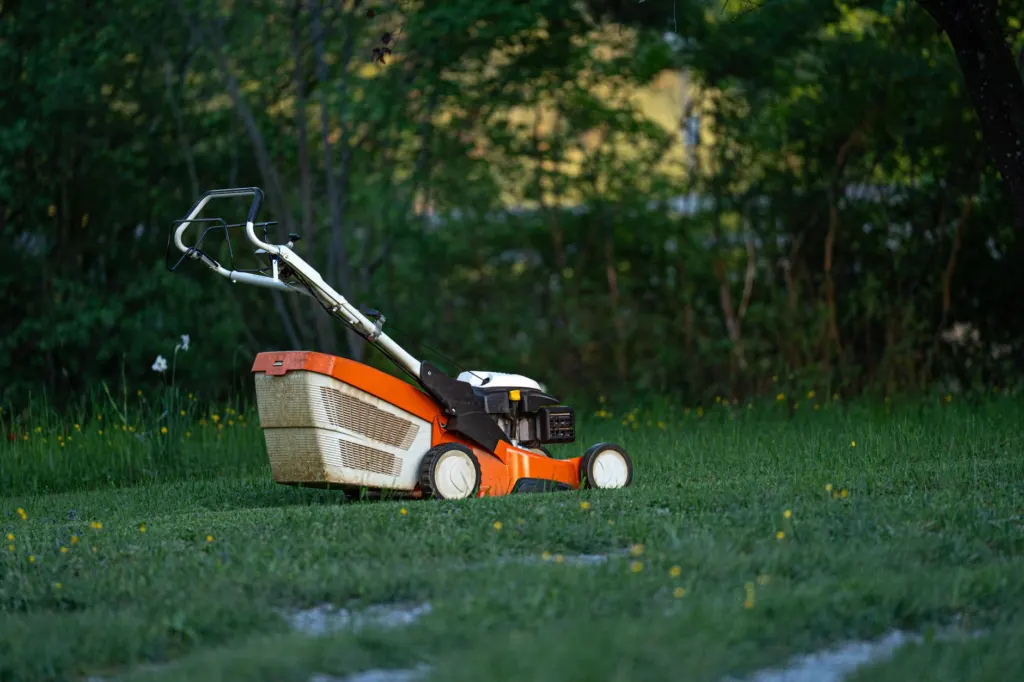
For most UK gardens, the best lawn mower is a cordless rotary model sized to the lawn. Look for easy height adjustment and a grass box that does not need emptying every few minutes. Large lawns, however, suit a self-propelled petrol or big-battery machine. Not sure which type you need? Read our guide to the types of lawn mower first.
Match the best lawn mower to your garden
Start with the lawn, not the brand. Size, slopes and storage space narrow the choice quickly, so measure the lawn (length × width in metres) before you shop.
| Your garden | What to prioritise | Sensible starting point |
|---|---|---|
| Small lawn near a socket | Low weight, folding handle | Corded or small cordless, around 30-34cm |
| Average back garden | Run time, easy height lever | Cordless rotary, around 37-42cm |
| Large lawn | Self-propel, big grass box | Petrol or large-battery model, 46cm or more |
| Slopes and banks | Light weight, good grip | Hover or self-propelled rotary |
| Flat lawn with stripes | Rear roller, fine cut | Rotary with a roller, or a cylinder mower |
Makers rate each mower for a lawn size. Bosch’s UK figures for three cordless rotaries show how width relates to area (checked November 2026):
| Bosch model | Cutting width | Recommended lawn area, max. |
|---|---|---|
| ROTAK18V-32 | 32cm | 150 m² |
| ROTAK18V2-38 | 38cm | 500 m² |
| AdvancedRotak 36V-44-750 | 44cm | 750 m² |
Treat these as best cases, because long or damp grass drains a battery faster. Other makers may measure area differently, so compare within one brand.
Battery, corded or petrol?
Cordless mowers now suit most gardens. Two figures matter: voltage, which hints at power, and amp hours (Ah), which decide run time.
The main drawback of a battery mower is cost over time. A spare battery can be expensive, and batteries slowly lose capacity as they age. On the other hand, if you already own cordless tools, a mower on the same battery system saves money. Our DeWalt vs Makita guide compares two of the widest ranges.
Corded mowers are light and cheap to run, while the cable limits how far you can go. Plug them into a socket with RCD (residual current device) protection, or use a plug-in RCD. That way the power cuts out quickly if the cable is damaged.
Petrol mowers have the most stamina for big lawns. Standard petrol in the UK is now E10, and some garden machinery may not be compatible with it. The GOV.UK E10 petrol guide advises checking the manual or asking the maker. If in doubt, use E5 super grade instead.
Features worth paying for
- Central height adjustment: one lever sets every wheel at once. Cheaper mowers make you move each wheel separately, which is slow.
- The right cutting heights: for ordinary lawns the RHS suggests 13-25mm in summer and up to 40mm in spring and autumn. Some mowers go no lower than 30mm, so check the range.
- A big grass box with a full indicator: a larger box means fewer trips to the compost bin, and the indicator shows when to empty it.
- Mulching: a plug or setting that chops clippings finely and drops them back into the turf. On long grass it may leave clippings to rake up.
- Rear roller: gives the striped finish many people want.
- Self-propel: the wheels drive the mower and you only steer, which helps on large lawns and gentle slopes.
- Brushless motor: usually more efficient than a brushed motor, so you get more cutting from each charge.
Deck material matters too. Plastic decks are light and do not rust, whereas steel decks are tougher but heavier.
Costs and what to check before buying
The shelf price is only part of the cost, so check these points in the manual or on the maker’s website.
| Check | Why it matters |
|---|---|
| Replacement blade price | Blades blunt over time and need sharpening or replacing |
| Spare battery price | One battery may not finish a large lawn |
| Warranty length and battery cover | Battery terms can differ from the mower’s, and some extended warranties need registering |
| Weight with the battery fitted | It matters on steps and slopes, and when lifting it into a car |
| Folded size | It has to fit your shed or garage |
| Local servicing for petrol models | Engines need regular servicing to keep starting easily |
Mowing habits that help any mower
Even the best lawn mower gives a poor finish if it is used badly. The RHS lawn mowing guide sets out the basics:
- Never take off more than a third of the grass height in one cut.
- Do not mow wet or frosty grass, because it can damage the turf and compact the soil.
- Keep blades sharp, since blunt blades tear the grass.
- Mow weekly or fortnightly from March to October, depending on growth.
- Empty the grass box regularly, so it does not leave clumps behind.
Checklist: choosing the best lawn mower
- Work out the lawn area and note slopes, steps and narrow gates.
- Choose the type first, then the cutting width.
- Pick a power source to suit the lawn size, the distance to a socket and any batteries you already own.
- Compare the quoted run time with your lawn, and budget for a second battery if needed.
- Check the height lever, the grass box size and any mulching option.
- Look up blade, battery and warranty details.
- Measure your storage space against the folded size.
Once the lawn is sorted, our guide to the best hedge trimmer helps you tidy the borders.